
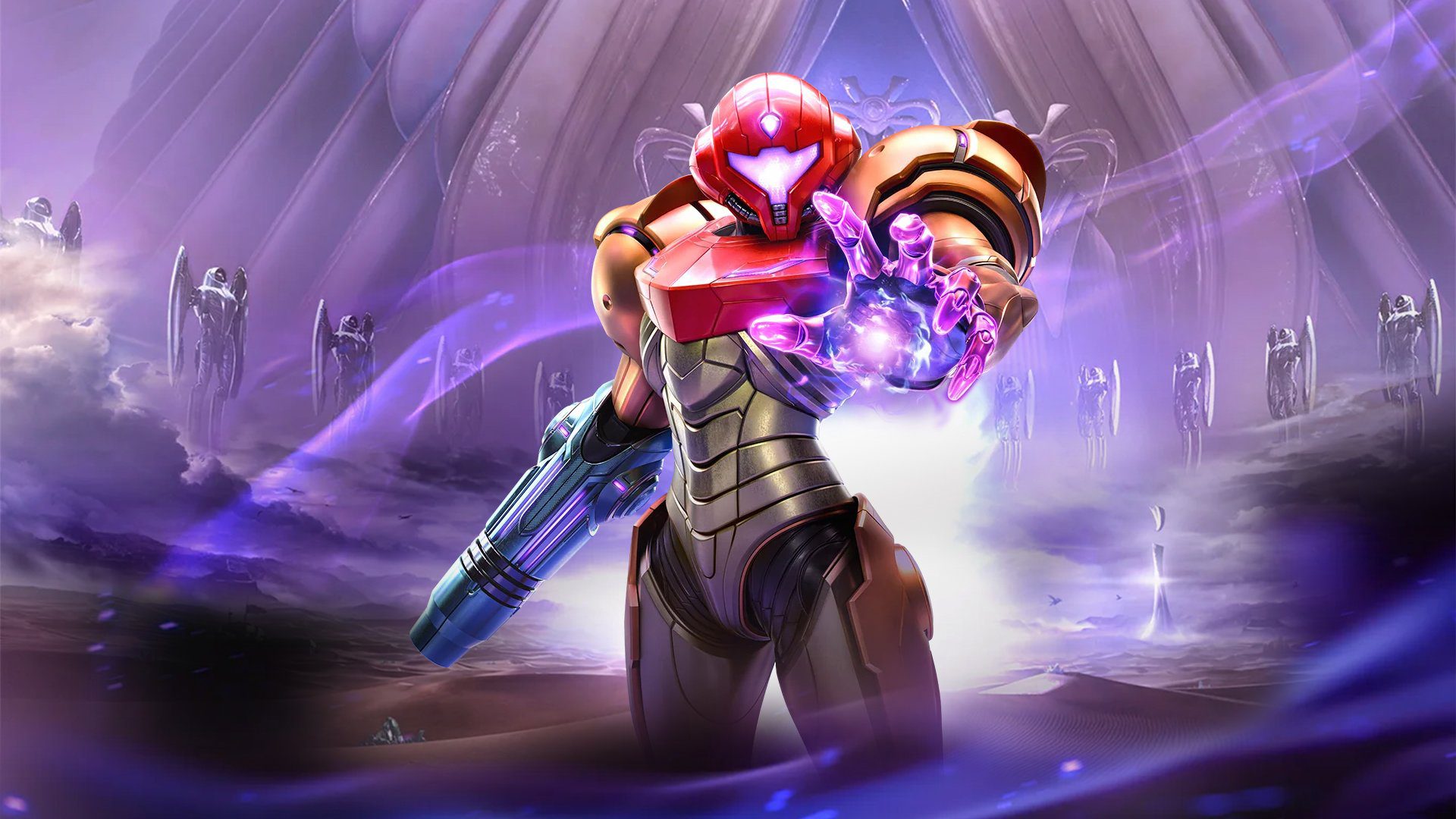
Metroid Prime 4: Beyond Switch 2 Review – A Series Seemingly Past Its Prime…
Eighteen years. That’s how long it’s been since a release in the critically acclaimed and widely beloved Metroid Prime series. Eight years. That’s how long it’s been since the game was initially revealed to be in development for the Switch. Six years. That’s how long it’s been since Nintendo announced that the game was being redeveloped from scratch by Retro Studios. Finally, it’s been about three days since I finished my 100% save file of Metroid Prime 4: Beyond, and it hurts me to say that the game left me feeling almost as hollow as its game design…
With the original Prime Trilogy, all scoring in the 90s on Metacritic, and Metroid Prime Remastered sitting at a 98 no less, it stands to reason that there was a huge degree of hype for Metroid Prime 4. Naturally, I assumed I would be in for another absolute masterclass in atmosphere and first-person, explorative gameplay. Sadly, I couldn’t have been more wrong.
There were warning signs, sure. The odd inclusion of a motorcycle for Samus to drive around on, a vast and seemingly empty open world and then… then the side characters came about in early previews and the internet went up in arms. After sinking nearly 15 hours into Prime 4 and realizing I should have paid more heed to all those red flags, let’s get into the weeds of what really went wrong here, shall we?
Metroid Prime In Name Alone
I had one recurring feeling throughout my time with Metroid Prime 4 more than anything else, and that was that the game felt like someone had tried to make Metroid Prime from memory; the visual splendor, music and area themes/atmosphere were all spectacular, but were missing one particular element… any genuinely engaging gameplay.
Gone were the intricate and interconnected corridors and winding pathways, replaced instead with linear and empty hallways. Gone was the complexity of combat scenarios with thoughtful enemy weaknesses and visor use, replaced with heaps of bullet sponges lacking enemy variety. Worst of all? Gone was the labyrinthian, complex world design that made locales such as Tallon IV such a joy to explore and get lost in, instead replaced by a huge, empty, and honestly pointless, desert. Retro remembered the completely missable scans from every other entry in the series though, out of all things they could possibly still include, why those?
Much like how Samus loses all of her key abilities at the beginning of every Metroid game, it seems that Retro forgot all of the key elements of what made the original trilogy so special. The framework and DNA of a Prime title is present within Prime 4, but is bogged down by some baffling design choices, including incredibly frustrating padding and time wasting, because the biggest issue at the heart of Metroid Prime 4: Beyond is that…
This Game Has No Respect For Your Time
Backtracking has always been a staple of Metroid, hell, the Metroidvania genre as a whole, but Prime 4 takes the backtracking and time-wasting to new heights (or should I say lows). There is so much filler content and plenty of needless, yet mandatory, questlines to follow in order to achieve the simplest of tasks across Prime 4.
Remember how in Metroid Prime 1-3, when discovering a new ability or item, Samus simply unlocked it then and there, allowing for you to immediately get to exploring all the areas it could unlock? Well Prime 4 says a big fat no to such convenience, and instead forces you back to Fury Green to speak with Myles MacKenzie and have him install an upgrade for you, every single time you unlock a new shot type. Why is it then, that when discovering upgraded versions of those shots, you get them instantly? Who knows, that’s why.
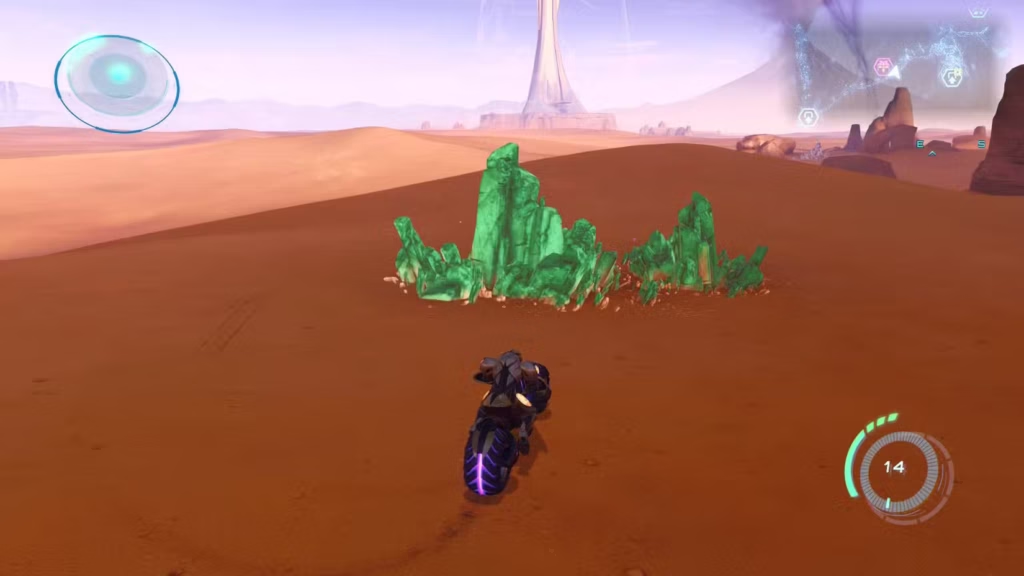
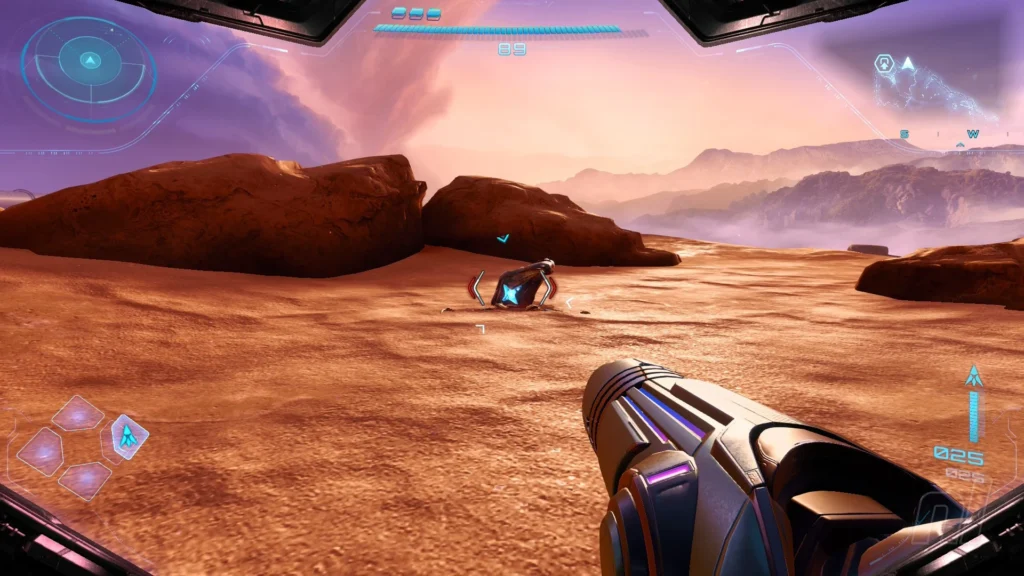
Before we veer off track (although you’ll be doing a lot of that in the spot we’re about to discuss), it’s about time that we address the vast, empty desert in the room; Sol Valley is the epitome of everything backwards with Metroid Prime 4’s entire design philosophy. The runbacks in prior Prime titles often had you unlocking different branching paths that were previously inaccessible to you with the new items you’d discovered since last passing through. Prime 4 instead gives you Sol Valley, a massive waste of a hub zone to connect each actual level, full of green crystals for you to dash into on Vi-o-la.
Why are they here? So you can get an item that lets you collect some different items, to break a thing to access the end-game boss. And why is Vi-o-la here? So you can do all that stuff I just mentioned. The developers wanted you to ride a motorbike, but had no real reason to implement the concept into the game, so instead of working out a way to make it fun, or just scrapping the idea, the player is instead forced to engage with mindless, checklist gameplay just because the idea was too “cool” to let pass up.
I’m aware I sound harsh here, but if Sol Valley was completely removed from the game, and instead each of the five main areas in the game were all connected similarly to Tallon IV’s world, with a maze of tunnels and elevators, then the game would be far shorter, but far more enjoyable. But that’s just the issue; without Sol Valley and all its needless time-wasting, the game simply wouldn’t have enough content anyway, and I think Nintendo knew that. But hey, more content is always better, right? Regardless of if it’s fun or not…
If I Have To Put Up With Quippy Characters, Could They At Least Be Well-Written?
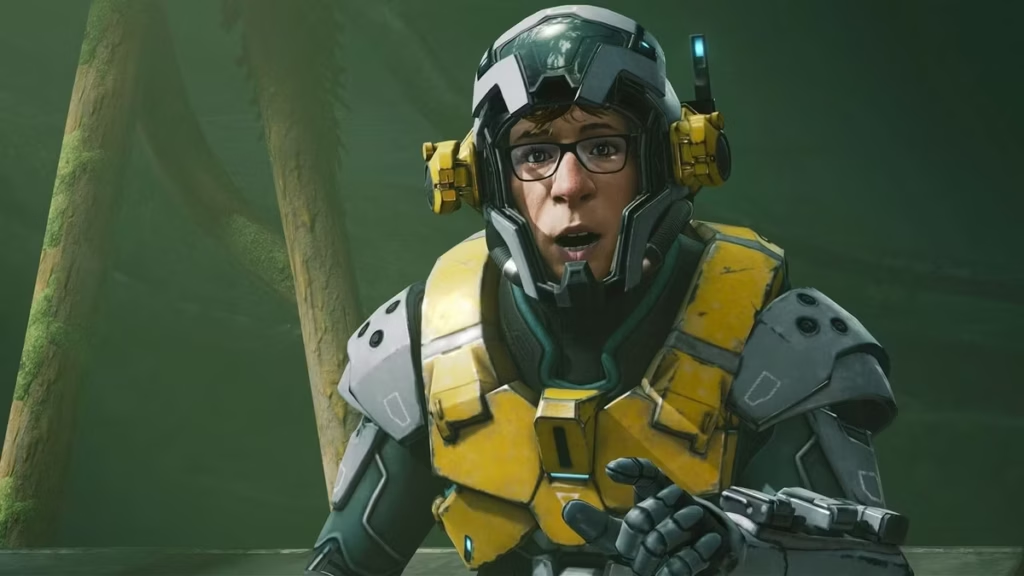
That’s not an unreasonable request is it? Well, it certainly seems like it when discussing the Galactic Federation troops which make up the game’s ensemble cast. We have the bubbly recruit Armstrong, lone sniper Tokabi, sergeant Duke and, of course, the infamous Myles MacKenzie, the star of the show.
These characters serve little-to-no narrative importance, simply tagging along with Samus in their corresponding area, to fulfill the grand purpose of putting their lives on the line to help the greatest bounty hunter in the known galaxy. Where they truly shine though, is in their gameplay necessity, and that’s unfortunately for all the wrong reasons. As previously mentioned, someone like Myles exists solely to provide Samus with her upgraded weapon shots, despite such upgrades being instantaneous in prior entries, marking a step backward in the overall game design and pacing.
Worse than even that, is the constant chatty dialogue whenever one of the Gal Fed troops are on-screen, which at least for me, did dampen the overall atmosphere of exploration in most areas where they were present. Additionally, Myles radioing the player after mere minutes of going off the beaten path and trying to get some genuine value out of exploring what little there is off the beaten path, just to tell you exactly where it is you need to go and what you need to do, is a level of handholding that even a newcomer to the series wouldn’t appreciate, or at least I’d think not.
Even worse than that, is that somehow Samus actually ends up coming across as arguably the worst character in the entire game. If the direction Retro and Nintendo want for Metroid is to be some grand space epic with a whole host of memorable characters, then one thing that you have to do is make Samus’ interactions with all of them interesting and entertaining. So why on earth does Samus not utter a single line of dialogue to anybody at all? I feel this decision must have stemmed from the backlash Nintendo faced as a result of Metroid: Other M, but the silent protagonist schtick we know and love from Samus actually ends up hurting her character in this instance, coming off as brash, uncaring and even rude at moments.
The new race of alien creatures we’re supposed to be unraveling the history of, the Lamorn, are pretty interesting in concept, and their societal development and downfall is woven quite nicely into the themes of each area, particularly the Volt Forge, which I genuinely did appreciate. Lastly, big bad, Sylux? I won’t even bother mentioning him, since Retro forgot to make him important to the plot. Whoops.
Diamonds In The Rough
I know what you’re thinking; “Wow Ben, you must HATE Metroid Prime 4, right?” No, and I certainly don’t hate Metroid in general either, I love this series! While I have plenty of qualms with the game and its design choices, there are still some things to enjoy about Prime 4.
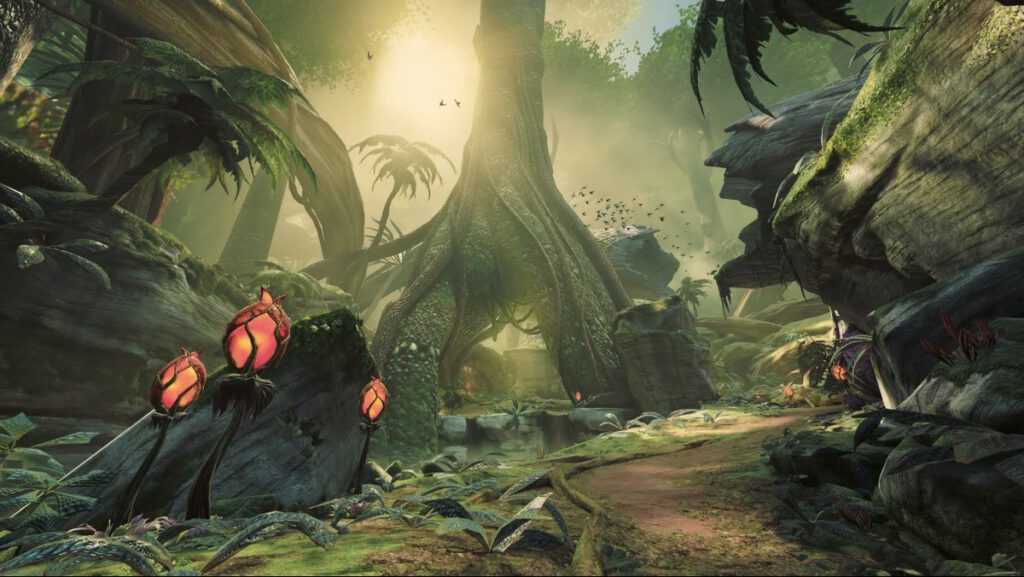
One thing in particular I could never fault this game for is its breath taking visuals. Fury Green evoked the same sort of feeling as having first stepped out into Tallon IV’s lush green landscapes. In particular, that first view of the Infinity Bridge was jaw droppingly gorgeous, and the same goes for many other areas of the game. Volt Forge has some of the best atmosphere and visual splendor out of any area in the entire series, even if too linear in the level design department. I would even go as far as to say that, at its best, Metroid Prime 4: Beyond is the best looking game Nintendo has ever released. In particular, the opening cutscenes and unlockable story for Sylux are so beautifully animated and if a Metroid movie ever does release, I would love for it to look like these cutscenes.
None of the atmospheric highs of this game would be possible without the incredible soundtrack, composed by Kenji Yamamoto and Minako Hamano, bringing their signature sound back to the series after its long hiatus. The main menu theme and Fury Green’s OST are among my favorites across the entire series, and both are available to listen to on the Nintendo Music app, so definitely go and give them a listen regardless of if you’re picking up Prime 4 or not.
Additionally, there is one area in which the game actually improves over prior entries in terms of quality-of-life changes as well, those being the Scan Bots found in each major area of the game. Once a certain shot type has been unlocked, finding and hitting them will reveal all unobtained items on the map for that particular area, making 100% item collection a breeze in comparison to previous entries. While some may think this takes away from what little explorative nature the game has to offer, I personally found it far preferable than wandering aimlessly or looking elsewhere online for guidance, as at least I didn’t have to be taken out of the game in order to see everything it had to offer me.
Conclusion
Hidden under the boring padding, superfluous fetch quests and linear level design, Metroid Prime 4: Beyond does have a few things to offer that I feel make it worthwhile to check out for anyone who’s looking for a simple, first person adventure experience. For long time Metroid fans, though, between the awkward character work, disappointing design and structure, and a frankly very poor ending, I think you’ll be left feeling almost as empty as Sol Valley is, and that’s a shame.
Is this a horrible video game in its own right? Not exactly, there are snippets of things to enjoy, and the base is there to build a truly brilliant experience for a potential Prime 5 later down the line, without the development struggles that this title suffered from, so let’s hope that Retro can learn from these mistakes and deliver a title as unforgettable and enjoyable as the original Prime trilogy in the years to come.
What do you think of Metroid Prime 4? Love it or hate it, let us know what your thoughts are in the comments down below!
